

The conversation usually starts small: a campaign looks fine, but not great; a presentation feels slightly off brand; engagement is steady, but growth has slowed.
Eventually, someone asks the question many teams struggle with: “Do we need to update our brand?”
That’s where confusion sets in. Some stakeholders think it means updating the logo or visual style. Others assume it’s a full website overhaul. Leadership may wonder if the brand itself is limiting growth – or if marketing is simply chasing something new.
This uncertainty is common, and it often leads teams to the wrong decision. Not because branding isn’t a priority, but because the difference between a brand refresh vs rebrand isn’t clearly understood.
While the two are often used interchangeably, they serve very different purposes. Choosing the right one can protect brand equity, save time and budget, and set your business up for sustainable growth.
This guide breaks down brand refresh vs rebrand, explains the key differences, and helps you determine which approach your business actually needs – so you can move forward with clarity and confidence.

Why the Brand Refresh vs Rebrand Decision Matters More Than Ever?
Today’s brands rarely get a second chance to make a first impression. Your audience encounters your business through a landing page, a LinkedIn post, a sales deck, or a paid ad – often long before they ever speak to your team. In seconds, they decide whether to trust you, engage with you, or move on, based on how clearly your brand communicates who you are and what you stand for.
This is why the brand refresh vs rebrand decision has become more critical than ever.
In 2026, marketing teams are managing more channels, tighter timelines, and higher performance expectations. When a brand is no longer aligned, the impact shows up everywhere: inconsistent campaigns, slow approvals, fragmented messaging, and declining results. What may seem like a minor branding issue often turns into a growth blocker.
Choosing between a brand refresh vs rebrand isn’t simply about visuals or aesthetics: It’s a strategic decision that affects perception, trust, and scalability. Make the right choice, and your brand supports growth. Make the wrong one, and even strong marketing efforts struggle to perform.
At its core, brand refresh vs rebrand is not a design question – it’s a business growth decision.

What Is a Brand Refresh? (Brand Refresh vs Rebrand Explained)
In the brand refresh vs rebrand conversation, a brand refresh is the right choice when the foundation is strong – but the outward expression no longer reflects who the business has become.
With a brand refresh, you’re still the same company serving the same audience. Your purpose, positioning, and strategy remain intact. What’s changed is growth. Over time, the brand visuals and messaging stop keeping pace with the business behind them, creating a disconnect between perception and reality.
1. What a Brand Refresh Typically Includes
As part of a brand refresh vs rebrand decision, a refresh focuses on refinement, not reinvention. Visual elements are evolved rather than replaced: color palettes become more intentional, typography becomes clearer, and layouts feel more confident and modern. Messaging is sharpened so the brand sounds like one cohesive voice instead of multiple departments speaking at once.
2. What Stays the Same in a Brand Refresh
One of the key distinctions in brand refresh vs rebrand is continuity. The core of the brand does not change. Your mission, values, audience, and positioning stay consistent. A brand refresh simply allows the brand to show up the way it should have all along – aligned, credible, and current.
3. When a Brand Refresh Makes Sense
Many growing companies reach a point where their brand no longer matches their scale. In the early days, speed matters more than polish, and the brand does its job. But as the team grows and the clients get bigger, the brand may still feel like it’s trying to prove itself instead of owning its position.
In these cases, the logo isn’t wrong and the messaging isn’t broken – it just doesn’t reflect the business anymore. This isn’t an identity crisis. In the brand refresh vs rebrand framework, this is a maturity gap. A brand refresh closes that gap.
4. Key Signs You Need a Brand Refresh
A brand refresh is usually the right choice when teams start saying:
“Our brand feels outdated.”
“We’re inconsistent across channels.”
“Marketing takes too long because everyone does things differently.”
In these situations, the brand isn’t failing – it’s simply no longer helping. From a brand refresh vs rebrand perspective, the strategy still works, but the execution needs to catch up.
Example: Starbucks Brand Refresh – Before vs After

Starbucks is a classic example often referenced in the brand refresh vs rebrand conversation.
Over the years, Starbucks evolved its brand multiple times – not because its identity changed, but because its scale did. As the company expanded globally, its original visual system became too complex and inconsistent across products, stores, and digital touchpoints.
Rather than rebranding entirely, Starbucks refined its visual identity. The iconic siren remained. The brand promise stayed intact. What changed was clarity. The logo was simplified, typography became more confident, and the system was designed to work seamlessly across thousands of locations and platforms.
This was not a shift in audience, purpose, or positioning. It was a strategic brand refresh that helped Starbucks show up consistently and confidently at global scale.
In brand refresh vs rebrand terms, Starbucks didn’t need a new story – it needed a clearer way to tell the same one.
What Is a Rebrand? (Brand Refresh vs Rebrand Explained)
In the brand refresh vs rebrand discussion, a rebrand is necessary when the brand no longer tells the right story – because the business itself has changed.
This isn’t about looking more modern or polished. It’s about being understood correctly by the market.
A rebrand happens when your positioning, audience, or direction has evolved, but your brand hasn’t caught up. When that gap widens, the brand starts working against growth instead of supporting it.
1. What a Rebrand Typically Includes
When comparing brand refresh vs rebrand, a rebrand goes far deeper. The brand is rebuilt from the inside out. Positioning is redefined, messaging is rewritten, and the visual identity evolves – or is replaced entirely – to support a new strategic direction.
Every element of the brand is aligned to reflect where the business is going, not where it started.
2. What Changes in a Rebrand
One of the clearest differences in brand refresh vs rebrand is impact. With a rebrand, perception shifts. The type of clients you attract changes. Your credibility in the market changes. Even the role your brand plays in the buying decision evolves.
A rebrand isn’t cosmetic – it’s strategic realignment.
3. When a Rebrand Is Necessary
Imagine a company that began by serving small businesses. Over time, enterprise clients came to dominate revenue. The product matured. The sales cycle became more complex. Expectations changed.
But the brand stayed the same.
Marketing struggles to communicate authority. Sales conversations feel like an uphill battle. Prospects don’t see the company as “enterprise-ready,” even though the capability is clearly there.
In this brand refresh vs rebrand scenario, no amount of visual cleanup can solve the problem. The brand isn’t just outdated – it’s misrepresenting the business. That’s when a rebrand becomes necessary.
4. Key Signs You Need a Rebrand
A rebrand is usually the right move when the conversation shifts to:
“Our audience has changed.”
“We’re being misunderstood.”
“Our brand no longer represents where we’re going.”
At this point in the brand refresh vs rebrand decision, the issue isn’t how the brand looks – it’s what the brand communicates. The foundation itself needs to evolve to support future growth.
Example: Ford Rebrand – Before vs After
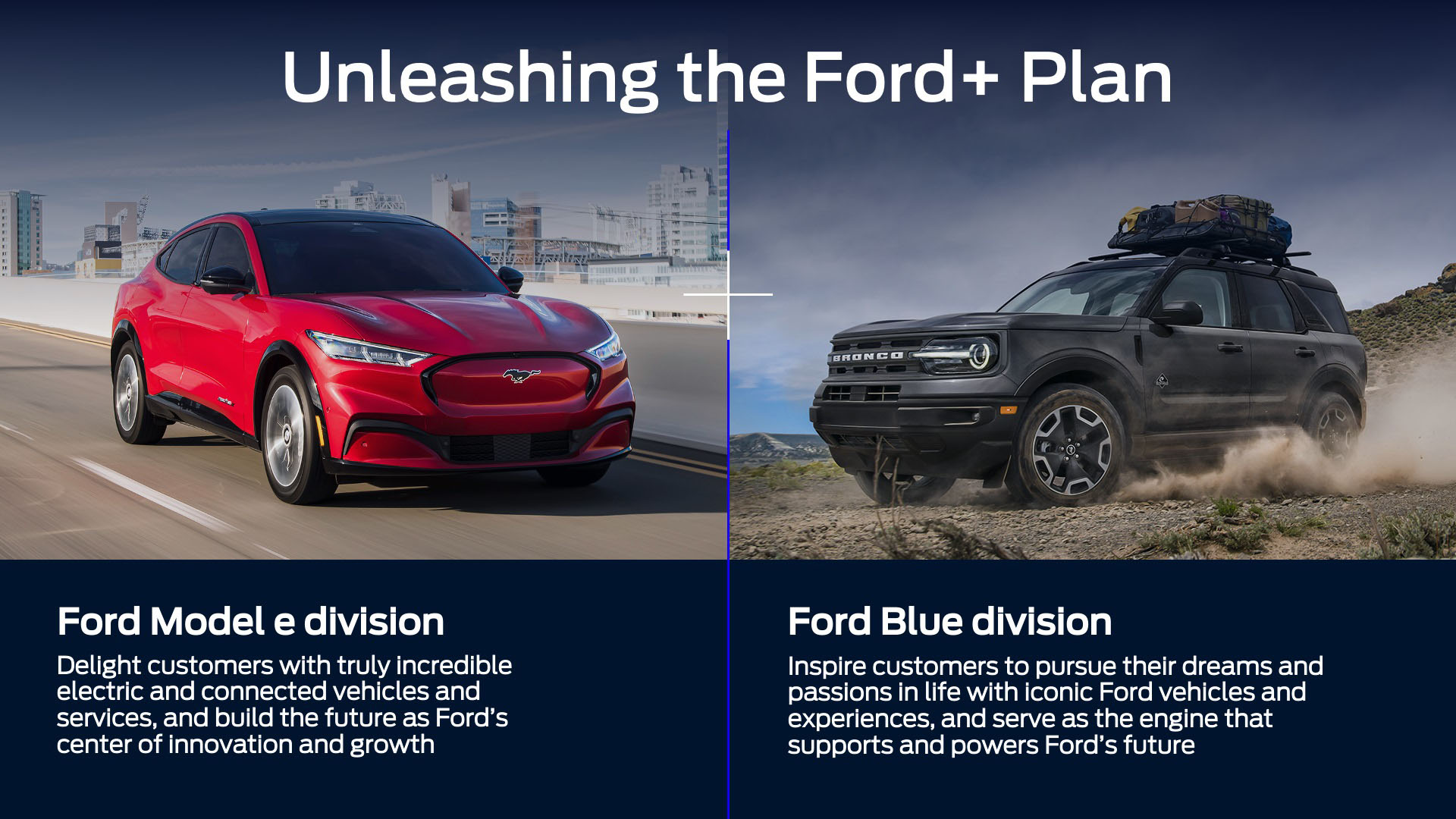
Ford is a strong real-world example in the brand refresh vs rebrand conversation – specifically on the rebrand side.
For decades, Ford was primarily perceived as a traditional automotive manufacturer. But as the company shifted its business toward electric vehicles, software-driven experiences, and future mobility, that story no longer reflected reality.
This wasn’t a case of outdated visuals. It was a misalignment between what Ford had become and how the market still understood it.
To address this, Ford restructured its brand architecture, introducing distinct divisions like Ford Model e and Ford Blue, redefining its messaging around innovation, electrification, and technology-led mobility. The brand’s role in the buying decision changed – from legacy automaker to future-forward mobility company.
In brand refresh vs rebrand terms, Ford didn’t just refine how it looked – it changed how it was understood. The positioning evolved, the narrative shifted, and the brand was realigned to support where the business was going next.
This is what a rebrand looks like when the business direction fundamentally changes.
Brand Refresh vs Rebrand: Side-by-Side Comparison
| Decision Factor | Starbucks (Brand Refresh) | Ford (Rebrand) |
| Core Business Change | No fundamental change to the business model | Major shift toward EVs, software, and future mobility |
| Audience | Same audience, just at a much larger global scale | Evolving audience with new expectations and priorities |
| Brand Problem | Inconsistency and complexity at scale | Misalignment between legacy perception and new direction |
| Primary Issue | Presentation | Perception |
| Brand Strategy | Still relevant and accurate | Needed to evolve |
| Scope of Work | Visual refinement and system simplification | Strategic repositioning and brand architecture change |
| Visual Identity | Simplified and clarified, not replaced | Evolved to support a new narrative |
The Takeaway: How to Use This Table
If your situation looks like Starbucks – your business is solid, your audience is the same, but your brand struggles with consistency or scale – you’re likely facing a brand refresh vs rebrand decision where a brand refresh is the right move.
If your situation looks more like Ford – your direction has changed, expectations have shifted, and the market misunderstands who you are – a rebrand is necessary to realign perception with reality.
This is the core difference in brand refresh vs rebrand:
-
Brand Refresh = clarify execution
-
Rebrand = redefine meaning

A Simple Brand Refresh vs Rebrand Decision Framework
When the answer isn’t obvious, clarity comes from asking the right questions. This simple framework can help you determine whether you need a brand refresh or a rebrand.
Has your target audience changed?
If yes, you’re likely looking at a rebrand.
Perception points to a rebrand. Presentation points to a brand refresh.
Inconsistency signals a brand refresh. Identity challenges signal a rebrand.
If not, the work needs to go deeper than a refresh.
 Has your target audience changed?
When these questions are answered honestly, patterns emerge quickly. In most cases, the right brand refresh vs rebrand choice becomes clear.
Need an Objective Brand Refresh vs Rebrand Recommendation?
Sometimes the hardest part isn’t choosing a direction – it’s knowing which one you’re already on.
A structured brand audit can reveal whether your brand needs refinement or reinvention, helping you move forward with clarity instead of guesswork.
At PUGO, we help growing brands refine their visual identity, clarify messaging, and create consistency – without losing what makes them recognizable. If you need support deciding between a brand refresh vs rebrand, feel free to reach out. We’d be happy to help.


