
Most businesses shopping for a brand identity design service assume the process starts with a logo. Sketches, concepts, a few directions to pick from. That assumption is usually where things start to go wrong.
A logo is one deliverable inside brand identity design, not the starting point. The step that actually determines whether the whole engagement works, or turns into months of rounds that never quite land, happens before a single visual gets made.
What You’ll Learn
- What a complete brand identity design service actually includes, beyond a logo
- Why skipping strategy and creative direction is the most common reason projects go over budget
- What it looks like when this step gets done properly
- What to check for before you commit to a package
What Brand Identity Design Actually Includes
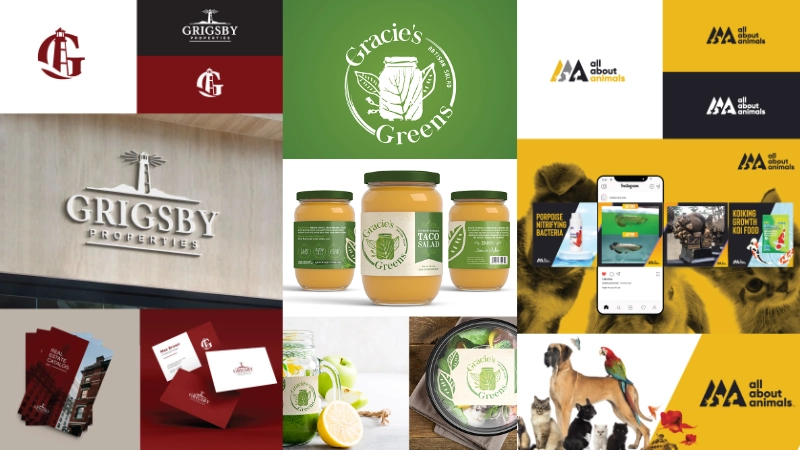
A logo is a mark. Brand identity is the full system around it, the strategy behind why it looks the way it does, the creative direction that keeps every asset consistent, and the guidelines that let your team use it correctly without coming back to your designer every time.
A complete engagement typically includes:
- Brand strategy — understanding your audience, your competition, and what your brand actually needs to communicate before anything is designed
- Creative direction — exploring and aligning on a visual direction before full design work begins
- Logo design — concepts, proposals, and revisions within an agreed scope
- A branding guide — fonts, colors, imagery, and usage rules so your brand stays consistent everywhere it shows up
- Industry standard files — versions built for print, web, light backgrounds, dark backgrounds, and single-color use
Skip the first two, and the rest becomes guesswork.
The Mistake That Costs the Most: Designing Before Aligning
Here’s a pattern we see often, and it rarely gets blamed correctly. A business and a design firm agree to start on logo concepts right away. No formal strategy session first. Both sides assume they’re picturing the same brand. They usually aren’t.
We had a prospect describe this exact situation to us directly. Their previous engagement offered a few sample designs, then quietly increased the fee with every additional attempt to get the direction right. Cost overruns followed, and eventually they walked away from the project entirely, no usable brand to show for the spend.
When we looked at what had actually happened, the problem wasn’t the visuals. It was that brand strategy and creative direction alignment had never happened. Both sides had just assumed they were on the same page from the start. They weren’t, and every round after that was an expensive guess dressed up as a revision.
This isn’t rare. Vague or rushed creative briefs are consistently cited as one of the top predictors of scope creep and mid-project rework, and the financial impact is well documented: scope creep pushes roughly 85% of affected projects over their original budget, with an average cost overrun of around 27%. That’s not a rare outlier. That’s close to the default outcome when design starts before direction is agreed on.
Why This Step Gets Skipped So Often
Our honest take, and it’s a little contrarian: most brand identity engagements fail before a single design is made, because nobody aligned on direction first.
This happens constantly, and it’s usually not negligence. Strategy and creative direction don’t produce a visual you can look at, so it’s easy to undervalue in the moment. Nobody sees the cost of skipping it until several rounds in, when the budget’s stretched further than expected and the direction still isn’t right. By then it’s expensive to fix. Wasted time, wasted effort, and a budget that’s already spent on rounds that never should have happened.
Strategy work isn’t a delay before the real work starts. Skipping it is usually what causes the delays, and the cost overruns, later.
What a Properly Structured Engagement Looks Like
When we recommend a path forward, it follows the same order every time, and it’s the same order built into how brand identity design should work generally, not just how we happen to do it:
- Brand discovery and strategy first. Understand the business, the audience, and the competitive landscape before any visual direction is proposed.
- Creative direction exploration and alignment next. Agree on the visual territory before full concepts are built out.
- Logo design and full identity system last, built on a foundation both sides already agreed on.
By the time visual work starts, there’s no guessing left to do. That’s what separates a brand identity process that lands on the first few rounds from one that spirals.
What This Looks Like in Practice
One client put it plainly after going through the strategy-first process with us: “The most difficult part was choosing between the 5 AWESOME designs given… the communication, professionalism, apparent dedication and pride in the quality of work, and a comprehensive breakdown of the strategy far exceeded my expectations.”
That’s what the strategy step is actually for. Not paperwork before the fun part starts, the reason the design options that follow are ones worth choosing between.
Where to Start
If what you need is a complete brand identity, one built with strategy and creative direction included rather than treated as an afterthought, that’s exactly what our branding design packages are built around. Every package includes brand strategy and creative direction as standard, not an upsell.
You don’t have to find out the hard way that direction should have come before design. It’s a lot cheaper to get it right the first time.


