

If your business needs both new branding and a new website, one of the decisions you will eventually need to make is who should handle the work.
Should you hire one studio for both branding and website design, or should you hire a branding specialist first and then work with a separate web designer or development team?
Both approaches can work. The better choice depends on what you are trying to accomplish, the capabilities you already have internally, your budget, the technical requirements of the website, and how much coordination you are prepared to manage.
Quick Answer: Hiring one studio for branding and website design can make the process more cohesive and easier to manage because the same team understands the brand strategy, creative direction, visual identity, and how those decisions should translate into the website. It can also reduce handoff problems, miscommunication, and the need for the client to coordinate several providers. Separate specialists can still be the better choice when the business already has a capable in-house web team, needs highly specialized development expertise, has trusted providers in place, or can achieve meaningful cost savings by separating parts of the project.
The more useful question is not simply whether one studio is better than two providers. It is which setup best supports the goal of the project, the capabilities you already have, and the limitations you need to work within.
Why Branding Should Usually Come Before Website Design
If a business needs both branding and a website, the branding should normally be established first because it gives the website a strategic and visual foundation to build from.
Before deciding how the homepage should look, how information should be organized, what imagery should be used, or how the interface should feel, the business needs clarity around who it is trying to reach, how it wants to be perceived, what differentiates it, and what kind of experience it wants people to have when interacting with the brand.
The brand identity then translates those decisions into a visual system through typography, color, logos, imagery, graphic elements, patterns, iconography, and other assets. Once that foundation is established, the website team has a clearer direction for how the digital experience should look, feel, and communicate.
This is why Pugo generally recommends establishing the brand before moving into website design. The website should express the brand rather than become the place where the business tries to figure out its brand direction along the way.
If your business is still establishing that foundation, learn more about Pugo’s Branding service.
Website Branding Is More Than Applying the Logo, Colors, and Fonts

One common misconception is that translating a brand into a website simply means using the correct logo, applying the approved colors, and choosing the right fonts.
Those things matter, but a well-branded website goes much further. The structure of the website, content, layout, UX and UI decisions, imagery, hierarchy, iconography, graphic elements, backgrounds, patterns, spacing, and interactions should all help support the brand goals and the impression the business wants to create.
A professional services company trying to communicate experience, stability, and trust should not necessarily create the same website experience as a consumer brand built around energy, spontaneity, and entertainment. Both websites may be technically sound, but the way they communicate should be different because the brands are trying to create different perceptions.
At Pugo, we see design as an expression of strategy.
A website is one of the most important environments where that strategy becomes visible and usable.
What Can Go Wrong When Branding and Website Design Are Handled Separately?
There is nothing inherently wrong with hiring separate branding and website teams. We have worked on projects where Pugo handled the branding while another provider handled the website design and development.
What we have sometimes seen is a website that works technically but does not fully translate the brand that was established beforehand. The pages function, the content is present, and the required features work. From a technical perspective, the project may have been completed successfully, but something can still feel disconnected.
Website teams naturally need to think about functionality, page requirements, responsiveness, usability, content, and development. All of those are essential. The problem is when those considerations become disconnected from the less tangible parts of the brand.
The team also needs to understand
- how the business should make visitors feel
- what impression the first few seconds should create
- which layouts support the personality of the brand
- what kind of imagery reinforces the positioning, and
- whether the overall experience should feel restrained, energetic, premium, accessible, technical, playful, authoritative, or something else.
A website can satisfy every functional requirement and still fail to feel like the brand it represents. That is one of the reasons close collaboration between branding and website teams matters.
What Are the Advantages of Using One Studio for Branding and Website Design?
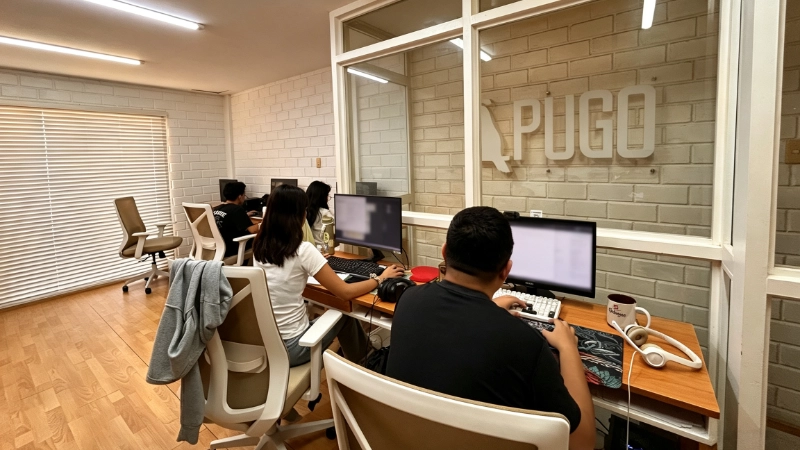
One of the biggest advantages is continuity. When the same studio handles the branding and the website, there is less need to transfer the entire creative direction from one provider to another and hope that every decision is interpreted correctly.
The website team can work with the people who developed the brand strategy and identity in the first place. If a question comes up about imagery, layouts, typography, visual hierarchy, or how the brand should behave in a particular digital situation, the branding team is still part of the conversation.
This also makes ongoing brand oversight easier. Brand consistency should not only be checked when the first homepage concept is presented. It should be considered as secondary pages, responsive layouts, interface components, imagery, and other details are developed.
For the client, an integrated setup can also reduce the amount of vendor management required. Instead of coordinating a branding studio, website designer, developer, and other specialists separately, the client may only need one main point of contact.
Fewer handoffs can also reduce opportunities for miscommunication. Clear documentation still matters, but every additional transfer of information creates another opportunity for something to be interpreted differently.
One Studio vs Separate Branding and Website Specialists
Neither model is automatically better. The trade-offs become more useful when viewed in the context of what the business already has and what the project requires.
Consideration |
One Integrated Studio |
Separate Specialists |
| Brand knowledge | Shared within the same team | Must be communicated between providers |
| Creative handoff | Usually minimal | Requires a deliberate handoff |
| Brand oversight | Easier to maintain throughout | Requires collaboration between teams |
| Vendor management | Usually one main point of contact | Client may coordinate several providers |
| Specialist choice | Limited to the studio’s capabilities | Greater freedom to select specialists |
| Cost flexibility | May involve a larger integrated engagement | May allow lower-cost combinations |
| Existing in-house web team | May duplicate capability you already have | Can make good use of internal resources |
| Technical specialization | Depends on the studio’s expertise | Easier to bring in a niche specialist |
| Communication | Generally simpler | Requires stronger coordination |
| Accountability | More centralized | Responsibilities need to be clearly scoped |
This should not be treated as a scorecard. A company with a capable in-house development team may have very good reasons to use separate providers, while a business without internal branding or web expertise may benefit considerably from an integrated studio.
When Does Hiring One Studio Make the Most Sense?
An integrated studio becomes particularly useful when branding and website decisions are closely connected and the business wants to reduce the amount of coordination required internally.
This often applies when a business is creating a new brand and website together, when a rebrand needs to flow directly into a new website, when the company has no internal branding or web team, or when consistency across the complete customer experience is a major priority.
It can also be helpful when the business wants one team to take responsibility for the overall creative direction rather than asking several vendors to independently interpret the same strategy.
These advantages are not limited to startups or small companies. An established company going through a major repositioning or rebrand can benefit from the same continuity if the technical requirements of the website fall within the studio’s capabilities.
When Are Separate Branding and Web Specialists the Better Choice?
There are equally valid situations where separating the work is the more practical decision.
You already have a capable in-house web team
If your company already has a capable in-house web team, there may be little reason to replace them simply because the branding studio also offers web development. An internal team may offer faster communication, quicker response times, and a deeper understanding of your existing website infrastructure.
In that situation, the branding studio can establish the strategic and visual direction while the internal website team handles implementation. The important part is keeping the teams closely connected so the website does not drift away from the brand as the project develops.
You need highly specialized technical expertise
Specialized technical requirements can also justify separate providers. Not every branding studio has website designers and developers, and studios that do offer web services will not necessarily specialize in every platform or type of development.
A complex software product, advanced web application, unusual eCommerce environment, or specialized integration may be better handled by a technical team that focuses specifically on those requirements.
Separating the work produces meaningful cost savings
Cost can also be a legitimate consideration. A business may already have access to a capable developer at a lower cost, or it may have development resources internally.
Separating the work can make financial sense when the savings are meaningful and the team still has the capability to protect the brand direction during implementation.
Separate Providers Do Not Automatically Mean a Disorganized Project
Using multiple providers is not automatically what causes responsibility or communication problems.
In our experience, those problems are much more likely to appear when the project scope, brief, ownership, or expectations are unclear. That can happen with one provider or several.
The project needs to establish who is responsible for each part of the work, who approves decisions, when the branding phase is sufficiently developed for web work to begin, how feedback is communicated, who checks brand consistency, and what sits inside or outside each provider’s scope.
When those responsibilities are clear, separate teams can collaborate very effectively. When they are unclear, putting everything under one company name does not automatically solve the problem.
How Can Separate Branding and Website Teams Stay Aligned?
If you decide to use separate providers, alignment should not be treated as a one-time transfer of logo files and a PDF brand guideline.
The website team needs to understand the thinking behind the visual system.
They should understand the following:
- audience,
- positioning,
- personality,
- messaging,
- creative direction,
- typography,
- color system,
- imagery direction,
- graphic elements,
- iconography,
- patterns, and
- the intended customer experience.
More importantly, they need to understand why those decisions were made.
A brand guideline can tell a designer which colors are approved. Understanding the strategy helps that designer decide how those colors should be used when the guideline does not contain an exact example for the situation in front of them.
Good execution requires more than mechanically following visual rules. It requires understanding what those rules are trying to accomplish.
How Do You Know Whether a Studio Is Actually Good at Both Branding and Web Design?
Do not assume a studio is strong at both simply because “branding” and “web design” appear in its list of services.
Review the work. Start by looking at the studio’s branding projects, then ask for website examples where the same studio also created the branding. The important question is whether the website genuinely feels like an extension of the brand that was created.
Look beyond whether the same logo, colors, and fonts appear. Consider whether the imagery feels appropriate, whether the layouts support the positioning, whether the user experience makes sense for the target audience, and whether the personality of the brand carries through into the digital environment.
A strong integrated project should feel like one connected system rather than a generic website that happens to be wearing the brand’s colors.
Should Branding and Website Design Happen at the Same Time?
Planning can overlap, but the core brand direction should usually be established before detailed website design begins.
Branding sets the strategic and visual foundation. Website design translates that foundation into a digital experience.
If the website team starts making major visual and experiential decisions before the brand direction is clear, some of those decisions may need to be revisited later. That creates additional work and can lead to unnecessary revisions.
A more logical sequence is to establish the brand strategy first, develop the creative direction and identity, document the system clearly, then move into website strategy, structure, design, and development.
The stages do not always have to happen in rigid isolation. Some technical planning, content preparation, and sitemap work can begin while branding is being finalized. What matters is that the website is not expected to define a brand that has not yet been established.
Is One Studio Always More Efficient?
Not necessarily.
An integrated studio reduces certain types of coordination, but efficiency depends on the resources the business already has.
For example, if a company has an experienced internal web team that already understands the website infrastructure, internal systems, and technical requirements, replacing that team with an external developer simply to keep everything under one studio may create more work rather than less.
A better question is where each capability already exists and which arrangement creates the fewest unnecessary gaps.
If the business lacks both branding and website capabilities, an integrated studio can simplify the process considerably. If the business already has part of the solution internally, combining internal and external expertise may be more efficient.
Should You Choose Based on Price?
Price matters, but it should not be the first question.
Before comparing proposals, start by defining what the branding and website project is actually supposed to achieve. The business may be trying to establish a new position, attract a different audience, improve credibility, support a new offer, replace an outdated digital presence, improve the customer experience, or prepare for another stage of growth.
Once that outcome is clear, consider the realities surrounding the project: budget, timeline, internal capabilities, technical requirements, existing systems, team availability, specialist expertise, approval processes, and long-term maintenance.
Then compare the available setups based on how well they support those requirements.
A cheaper arrangement is only better value if it can still deliver the outcome the business needs.
Likewise, paying more for one studio is not automatically justified simply because everything sits under one roof.
How Should You Decide Between One Studio and Separate Specialists?
Start with your ultimate goal for the project.
Ask what you need the branding and website to accomplish, what capabilities already exist inside the business, what your limitations are, and where the biggest risks or gaps sit.
If you need both branding and website expertise externally, want the two to feel tightly connected, and prefer to minimize vendor coordination, one studio can be a very practical choice.
If you already have a capable web team, need specialized technical expertise, have established partners, or can reduce costs without compromising the brand, using separate specialists may make more sense.
The right setup is not determined by the number of providers involved. It is determined by how well those providers support the outcome you are trying to achieve.
The Best Setup Is the One That Supports the Goal
There is no rule that says every business should hire one studio for branding and website design, just as there is no rule that assembling separate specialists will always give you better expertise.
What matters is whether the setup supports the outcome you need.
If one studio can provide the branding, website design, and development capabilities your project requires, an integrated approach can reduce handoffs, make communication easier, and help protect a cohesive brand experience from strategy through implementation.
If your business already has strong technical capabilities internally or has trusted specialists who can execute the work effectively, separating the project can be just as successful. The branding and website teams simply need to remain aligned around the same goals and creative direction.
The goal is not to keep everything under one roof for the sake of convenience. It is to create a brand and website that work together to communicate the right message, create the right impression, and help the business achieve what the project was created to accomplish.
Planning a Branding or Website Project?
If you are planning a new website, a redesign, or a branding and website project together, Pugo can help you determine the right approach based on what your business is trying to achieve.
Our web team works across website strategy, UX/UI design, WordPress development, and ongoing website support, while our branding team can stay involved when the project also requires a new or updated brand. This allows the website to be developed with the wider brand direction in mind rather than treated as an isolated deliverable.
Explore Pugo’s Web Services to see how we approach website projects and the different ways we can support your business.
If you already know what you need, or you are still deciding whether an integrated studio or separate providers make more sense for your situation, contact Pugo Design Studio and tell us about the project. We can help you identify the right scope before you commit to an approach.


