
A Guide for Business Owners
You know you need branding help. You’re just not sure where to start. That’s not a problem. That’s the most honest starting point any business owner can have.
Branding is one of those words that gets used constantly and explained poorly. So here’s what branding actually is, what it includes from start to finish, and how the process works in practice.
What Is Branding?
Branding and brand are not the same thing, and mixing them up is where most of the confusion starts.
Branding is the act. It’s the deliberate process of designing and shaping how you want your business to be perceived, by your audience, and against your competition. Every choice involved, your logo, your colors, your fonts, your tone of voice, your messaging, is a branding decision. Branding is something you do.
Brand is the result. It’s how your audience actually perceives you once those choices have landed. It’s the feeling someone gets when they interact with you. It’s what comes to mind when they hear your name. Brand is something they experience.
Your logo, colors, and fonts are branding decisions. The impression those decisions create in someone’s mind, that’s your brand. Jumping straight to visual decisions without the strategy behind them is the most common branding mistake business owners make. It’s why so many end up with a logo that looks fine but doesn’t feel right, doesn’t connect with the right audience, and doesn’t hold up as the business grows. The visuals were chosen, but nobody decided what perception they were supposed to create.
Branding done right is a system. It starts with strategy and ends with a brand, a perception in your audience’s mind, that actually works in the real world.
What Does Branding Include?
A complete branding project covers three main areas:
Brand Strategy
Your positioning, your audience, your purpose, and how you want to be perceived in the market.
Brand Identity
Your logo, color system, typography, graphic elements, and brand guidelines.
Brand Materials
Everything that puts the identity to work: your corporate kit, social media assets, marketing designs, and website.
Each one builds on the last. Skip the first and the second one has no direction. Skip the second and the third one has no consistency.
Where Does Branding Start?
The first step is not a design tool. It’s a conversation.
Before we touch any design element at Pugo, we need to understand where you currently stand. Have you already started with a logo, colors, or fonts? Are you building from scratch? Either is fine. The starting point just needs to be clear.
From there, we go into discovery.
What Questions Does a Brand Strategy Cover?
These are the questions we work through with every client before any design work begins:
- Why did you start this business? What was your original motivation?
- Who is your ideal customer? Who are you doing this for?
- What problem do you solve for them?
- What does their life look like before they find you, and after you’ve helped them?
- Who are your direct competitors? What strengths do they have over you?
- Why should your target audience choose you over them?
- How do you want to be seen by your ideal audience?
- How do you want people to feel when they interact with your brand?
- If your ideal customer described your brand in five words, what would those words be?
These are business questions. They have almost nothing to do with design. But they determine every design decision that follows. Once we have clear, honest answers, everything gets documented in a brand foundation document. That becomes the reference for the entire project.
What Is a Brand Positioning Map and Why Does It Matter?
Once the brand foundation is built, we map the competitive landscape.
A brand perception map is a two-axis graph that plots where your competitors currently sit in the market. The axes are chosen based on what actually matters in your industry. We place each competitor on the map based on their current visual language and positioning, then we identify where your brand should sit to stand out.
This is not a design tool. It’s a strategy tool. But it shapes everything about the visual direction.
Here’s a real example. When we worked on the rebrand for Movin’ N Removin’, a moving and junk removal company in North Shore Long Island, NY, we mapped six competitors across axes of Serious to Fun and Complex to Minimal. What we found was that most of the major players clustered in predictable zones. Brands like Men on the Move and United Van Lines sat serious and minimal. The fun and minimal territory, where a brand with genuine personality could own a distinct position, was wide open.
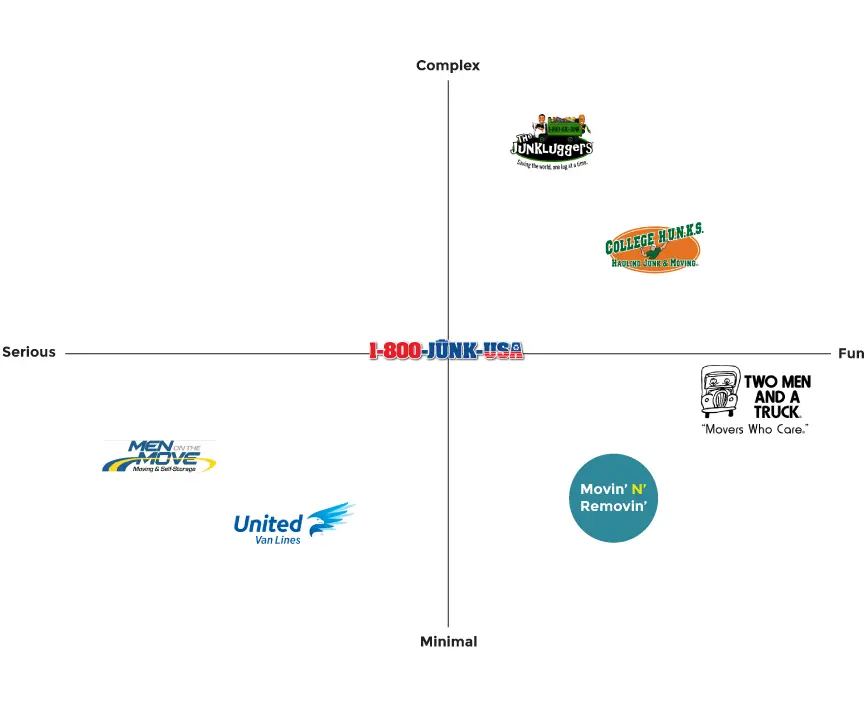
That gap became the foundation for the entire creative strategy. The brand didn’t need to shout louder. It needed to stand somewhere nobody else was standing.
You can see the full case study here: Movin’ N Removin’ brand redesign.
What Is a Creative Direction Proposal?
After the brand foundation and positioning are approved, we develop three creative direction proposals. Each one is a distinct visual direction built around what we’ve defined together.
Each proposal includes a concept explanation, sample logo direction, color palette, typography, and a mood board. The mood board gives you a clear picture of the overall visual feel before any detailed design work begins.
Here’s an example from our Qure It pest control rebrand. One of the three directions we proposed was called “Naturally Traditional.” It was built around a friendly, warm visual language using curved fonts, muted organic colors, and familiar imagery.
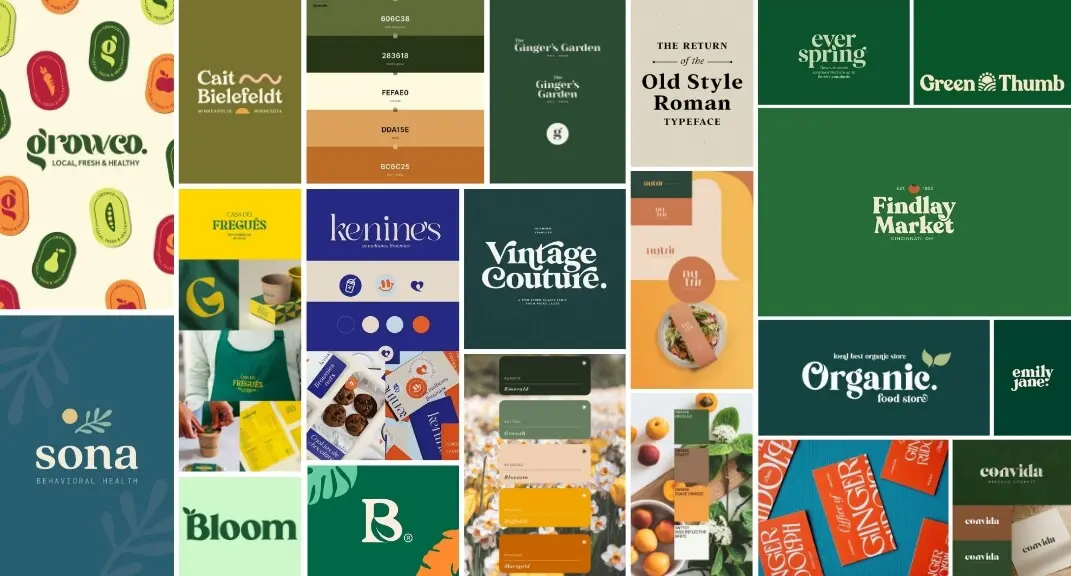
The client chose a different direction: “Modern Optimist” because it better matched their personality and placed them in an uncontested position in their market. But the point is this: by the time the client is choosing a direction, they’re not making a random judgment call about what looks nice. They’re making a strategic decision based on research, competitive data, and their own brand foundation.
That’s what separates a branding process from a logo exercise.
See the full case study here: Qure It pest control rebrand.
How Does the Full Branding Process Work?
Step 1
Brand Discovery and Foundation
Every branding project starts with discovery. We ask the right questions, listen carefully, and document everything in a brand foundation document. This captures your purpose, your audience, your values, and how you want to be perceived.
Nothing moves forward until this is reviewed and approved. That approval matters. It means both sides are fully aligned before a single design is created.
Step 2
Competitive Positioning
We build the brand perception map, identify where the real opportunity is in your market, and agree on a positioning direction. This becomes the strategic brief for all design work.
Step 3
Creative Direction Proposals
We develop three distinct visual directions, each grounded in your brand foundation and positioning. You choose the one that fits. From this point forward, every design decision has a clear reason behind it.
Step 4
Logo Design
With creative direction locked in, we move into visual execution. The logo comes first. By this stage, there’s no guessing and no going back and forth over preferences. The brief is clear.
Step 5
Full Brand Identity System
Once the logo is approved, we build the complete identity system around it:
- Brand color palette and usage rules
- Typography system
- Graphic elements and patterns
- Iconography
- Image treatment and photography style
All of this gets documented in a brand guidelines document. This is the rulebook for your brand. Every designer, marketer, or social media manager who ever works on your brand uses this to keep everything consistent.
Brand consistency isn’t a design preference, it’s a business advantage, and it’s worth getting right from the very first decision, before the logo is even designed. Brands that look and feel the same across every touchpoint build recognition and trust faster than fragmented ones.
Step 6
Brand Materials
With the identity system in place, we produce the brand materials your business actually needs:
- Corporate identity kit (business cards, letterheads, email signatures)
- Social media kit
- Sales and presentation materials
- Marketing design assets
- Website design and development
Every piece is built from the same foundation. The same strategy. The same visual language. That’s what makes a brand feel cohesive, and cohesion is what makes a brand memorable and trustworthy.

Why Does Branding Need to Follow This Order?
It’s tempting to skip ahead. You need a logo now. You have a launch coming.
But skipping the foundation is exactly why so many businesses end up rebranding within two or three years. They built visuals without strategy. The visuals looked fine but stopped making sense as the business grew. The brand started to feel generic, or it attracted the wrong audience, or it just never felt like an accurate reflection of what the business actually was.
The process we follow isn’t slow, it’s efficient. Each phase builds directly on the last. There’s less revision, less confusion, and a far stronger result at the end. You’re not changing direction halfway through. You’re executing a plan that was built before a single pixel was placed.
We’ve seen what happens when it’s done in the right order. Clients are more confident in every decision because they understand the reasoning behind it. The result reflects the business accurately. And the brand works in the market, not just on a screen.
What Happens When Branding and Reality Don’t Match
There’s one more way branding goes wrong, and it has nothing to do with skipping steps. It happens even when every step above is followed correctly.
It’s a mismatch between the brand you’ve built and the business underneath it.
Here’s where this shows up.
A business builds a premium-looking brand identity: polished visuals, an elevated tone, a sense of exclusivity. But the pricing and the actual service underneath don’t match that positioning. Premium-minded customers show up expecting a premium experience, don’t get it, and leave disappointed. Some leave bad reviews, which damages the very reputation the branding was supposed to build. Meanwhile, the business’s actual target customers, the ones who’d have been a perfect fit for what’s genuinely being offered, get scared off before they even reach out, because the branding made the business look out of their reach or not meant for them.
That’s not a branding win. That’s a mismatch, and it costs the business twice: once in disappointed customers who never should have shown up, and once in good-fit customers who never did.
This is exactly why branding has to start with strategy, not aesthetics, which is the whole point of the process outlined above. The brand you build isn’t supposed to project an aspirational version of the business. It’s supposed to accurately represent what the business actually is and who it’s actually for, just at its most clear and compelling. When the brand and the reality are aligned, everything about the customer relationship gets easier. There’s no dissatisfaction to manage, no expectation gap to apologize for. The right audience arrives already knowing what they’re getting, because the brand told them the truth before they ever reached out.
That’s what branding done right is actually for. Not decoration, and not aspiration disconnected from reality. A process that builds a true brand, one that does the convincing before anyone has to say a word, because it’s convincing people of something real.
Brand vs. Branding vs. Brand Identity: Getting the Terms Straight
Three terms, three different things, and almost everyone uses them interchangeably. Here’s the distinction, cleanly:
Brand is the perception. It’s what exists in your audience’s mind: the feeling, the reputation, the gut reaction someone has when they think of your business or see your name. You don’t fully control your brand. Your audience does. They decide what they think of you.
Branding is the act. It’s everything you deliberately do to influence that perception in the direction you want: choosing your colors, your fonts, your logo, your tone, your messaging, your positioning against competitors. Branding is the work you put in, on purpose, to shape how you’re seen.
Brand identity is the visual and verbal output of that work, the actual logo, color system, typography, tone of voice, and the guidelines that hold all of it together consistently.
Put simply: branding is what you do. Brand identity is what you build while doing it. Brand is what your audience ends up believing because of it.
If you want the deeper distinction between two of these specifically, logo and brand identity aren’t the same purchase either, and knowing the difference changes what you should expect when you hire someone to build either one.
You need all three working together. A beautiful visual identity without a clear strategy behind it is decoration. A solid brand strategy without a well-executed visual identity is invisible. And neither one matters if the perception they create doesn’t match what your business actually delivers, which is exactly where things tend to go wrong.
What Does Branding Include? A Quick Summary
Here’s the short version for anyone who wants a direct answer:
Branding includes brand strategy
Your purpose, positioning, audience, and competitive differentiation.
Brand identity
Your logo, color system, typography, graphic elements, and brand guidelines.
Brand materials
Corporate identity, social media kit, marketing designs, and website.
It starts with strategy. It ends with a visual system that makes your business recognizable, consistent, and worth choosing.
If you’re at the start of this journey and ready to build something that actually works, explore our branding design packages or get in touch and let’s start with the right questions.


