
Most business owners come to us thinking graphic design is about making things look good. It is a reasonable assumption, but it is incomplete. After working with dozens of brands across the US, Australia, and beyond, we have seen what happens when design stops at aesthetics, and what becomes possible when it does not.
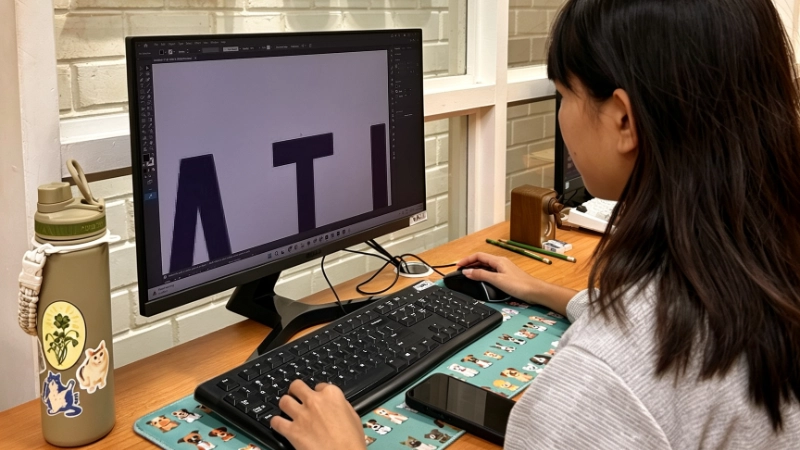
So what is graphic design, actually? This guide covers what it means, why it matters for your business, and what separates design that works from design that just looks nice.
What You’ll Learn:
- What graphic design actually means, beyond “making things look nice”
- The most common mistake business owners make before they understand design
- Why AI-generated design is creating a credibility gap for brands that lean on it
- What a design studio does differently from a freelancer
- What professional graphic design actually costs
What is Graphic Design?
Graphic design is visual communication with a purpose. It is the practice of combining typography, colour, imagery, and layout to deliver a specific message to a specific audience. It does this in a way that is clear, intentional, and aligned with a business goal.
The key word is intentional. In a well-executed design, every element has a reason to be there: the typeface, the colour, the spacing, the imagery. None of it is there because it looks appealing. It is there because it serves the communication objective.
This is where most people misunderstand graphic design. It is not about expressing creativity for its own sake. It is about creatively achieving a goal. A design with a purpose.
A Brief History of Graphic Design
Visual communication traces back to cave drawings in 15,000 BC. The term “graphic design” itself was coined in 1922 by William Addison Dwiggins, who described it as a blend of typesetting, illustration, and design principles.

Since then the discipline has evolved alongside every major shift in technology, from the printing press to digital software to AI-generated imagery. The tools change. The purpose does not.
What Business Owners Get Wrong About Graphic Design
After more than a decade working with business owners, the most common misconception we encounter is this: graphic design is easy, quick, and mostly about making things look nice.
This thinking leads to rushed briefs, undercooked executions, and design that looks fine on screen but fails to move the needle for the business.
Here is what effective graphic design actually requires:
Knowledge of design fundamentals. Hierarchy, contrast, alignment, colour theory, typography. These are not optional. They are the difference between a design that guides the eye and one that confuses it.
Understanding of the brand, the audience, and the positioning. You cannot design for a brand you do not understand. Before we start any project at Pugo, we go through a brand discovery process. We learn how the client wants to be seen, how they are currently perceived, and what the gap between those two things looks like. We design to close that gap.
Strict adherence to brand guidelines. Consistent design is recognisable design. It is not about personal expression. It is about representing the brand accurately and consistently every time, across every touchpoint.
A clear goal for every piece. Every design deliverable should have an objective. A social media graphic should drive engagement. A brochure should move a prospect toward a conversation. A brand identity should position the business in its market. If a design does not have a goal, it is decoration.
Why Graphic Design Matters for Your Business
In a competitive market, design is often the first impression a business makes. It signals quality, professionalism, and seriousness before a single word is read.

We rebranded a small independent pharmacy in the US early in their growth. The new identity gave them the same professional, credible presence as much bigger competitors, and it quickly became something clients mentioned to them unprompted. The business has since scaled and built its own consulting arm to help other independent pharmacies grow. They are still one of our most consistent referral sources today. That is the return an intentional brand identity can generate. Not just a stronger first impression, but a foundation the business kept building on.
Design that works for your business does four things:
- Captures attention in a crowded market
- Communicates professionalism and builds trust immediately
- Creates recognition through consistent visual identity
- Guides the viewer toward a specific action or decision
The Problem with AI-Generated Design
In 2026, AI tools can generate hundreds of design variations in minutes. Many business owners see this as an obvious advantage: more output, less cost, faster delivery.
The reality is more complicated.
Speed and volume do not make design effective. Getting a hundred AI-generated social media graphics done in a day does not mean those graphics will build your brand or convert your audience. What we are seeing instead is a backlash. Brands leaning heavily on AI-generated design are increasingly viewed as lazy and unprofessional, as brands not serious enough about their identity to invest in it properly. The audience picks up on it faster than most business owners realise.
AI is a useful production tool in the right hands, hands that understand brand strategy, design fundamentals, and how to evaluate quality output. Without that foundation, it produces volume without value.
This is exactly why the businesses getting real value out of design treat it as a partnership, not a task list. If you want to see what that looks like in practice, explore our branding process.
Design as a Cost vs Design as an Investment
The difference between businesses that treat graphic design as a cost and those that treat it as an investment shows up clearly in the results.
Businesses that treat it as a cost cut corners. They rush the brief. They skip the strategy. They accept the first concept rather than working through the creative exploration. The output reflects those decisions: technically functional but lacking the depth that makes a brand memorable and trusted.
Businesses that treat it as an investment work differently. They engage in the process. They communicate clearly about their goals, their audience, and their market position. They give honest feedback. They allow time for creative thinking. The result is design that genuinely represents the brand, and that kind of design is every designer’s dream to work on.
The commercial difference between these two approaches is not subtle. One produces a design. The other builds a brand asset. Consistent branding can increase revenue by 10 to 20 percent, according to Marq’s brand consistency research. Our pharmacy client is a case in point. The identity we built became something they kept building the business around, long after the original project was finished.
What a Graphic Design Studio Does Differently
When a business works with Pugo, they are not working with a single designer. They are working with a flock.
We structure our studio into specialist flocks: a Branding Flock for identity and logo work, a Web Flock for website design and development, and a Graphic Flock for marketing and production design. Every project is handled by the flock that specialises in that type of work.
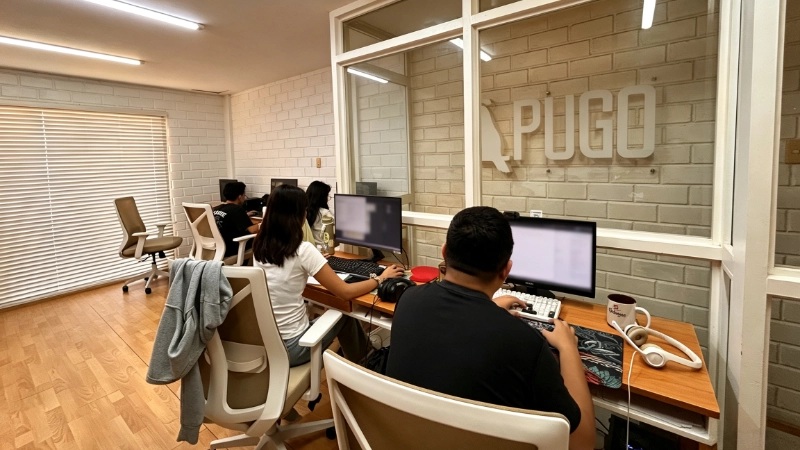
Every deliverable also passes through two layers of review before it reaches the client. The Flock Lead checks the design quality, ensuring design fundamentals, brand alignment, and creative standards are met. The Client Manager checks that every instruction has been followed, every request has been delivered, and every content detail is accurate.
This structure is what allows Pugo to work at scale and to work with established brands that have strict brand guidelines. We do not just produce designs. We apply brand thinking to every project. That is the difference between a studio and a freelancer, and it is why the output is consistently reliable across brief types, markets, and client sizes.
Where does your business actually fit?
| Option | The Trade-off | The Pugo Difference |
|---|---|---|
| DIY / templates | Fast and free, but generic, and inconsistent across touchpoints | Pugo starts where template tools stop |
| Freelancer | Affordable for one project, but no backup, and needs a fresh brief every time | A coordinated team working under one brief, not one person |
| One-off agency | Delivers the project, then the relationship ends | An ongoing partner who keeps learning the brand over time |
| Pugo retainer | Consistent, strategic, and scales as the business grows | Same team, same brand knowledge, every project |
If your business needs consistent, strategic design, whether for a one-time brand identity project or ongoing creative support, explore our graphic design retainer packages or view our work to see how we approach brand challenges across industries.
Conclusion
Graphic design is not decoration. It is one of the most direct tools a business has for communicating quality, building trust, and standing out in a market full of competitors. The difference between design that works and design that does not comes down to intention: every element should have a purpose, every decision should serve a business goal, and the process should start with a clear understanding of the brand, the audience, and the gap between where the business is and where it wants to be.
If your design is not doing that work for you, it is worth asking why, and what a more intentional approach might look like.
Talk to our studio about what purposeful design can do for your business. Or view our work to see how we have helped brands across the US, Australia, and beyond grow with design that means something.


